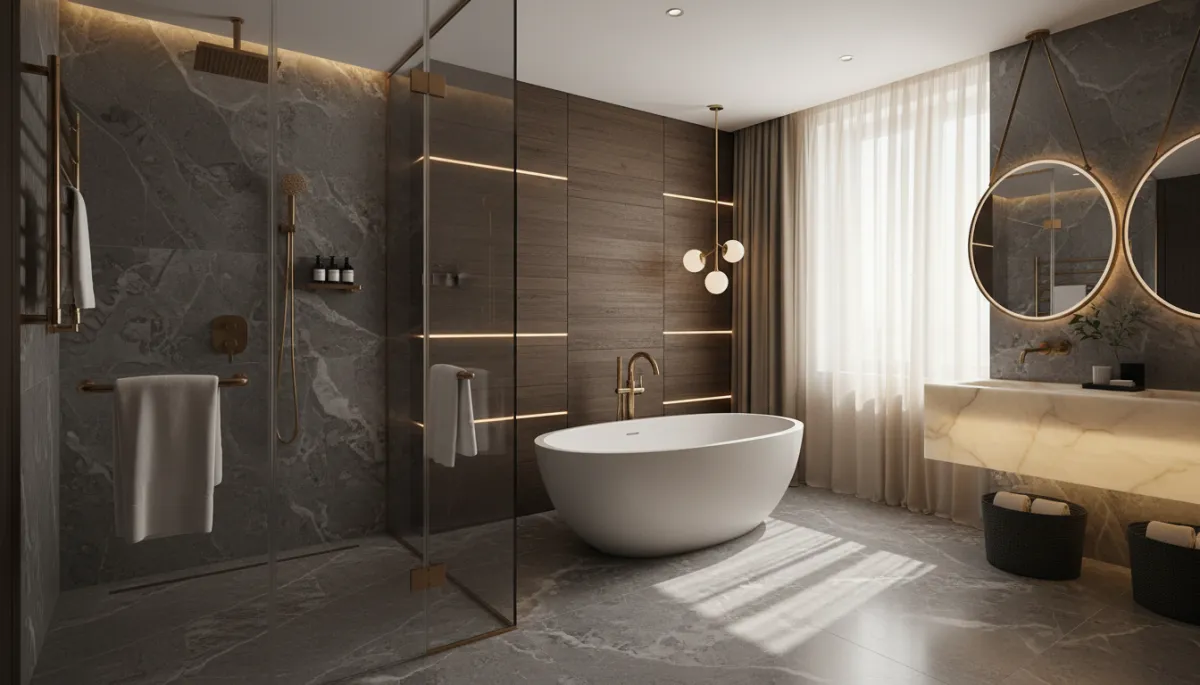
Bathroom Remodeling 101: What Elmhurst Homeowners Need to Know Before They Start
A bathroom renovation is one of the highest-return projects you can tackle — if you go in with the right knowledge. Here's the full picture.
The Case for Remodeling Your Bathroom
Bathrooms punch above their weight when it comes to home value. A midrange bathroom remodel in the Chicago suburbs — which includes Elmhurst, Addison, Bensenville, and Wood Dale — typically returns 60–70% of its cost at resale. An upscale master bath remodel can return even more in high-demand DuPage County neighborhoods where buyers have elevated expectations.
Beyond resale, there's a compelling quality-of-life case. The bathroom is one of the first spaces you experience in the morning and one of the last at night. An outdated, dysfunctional bathroom affects daily mood in ways homeowners often don't fully appreciate until after the renovation is complete. A well-designed bath can feel like a personal retreat in your own home.
Understanding the Scope: Which Type of Remodel Do You Need?
Not every bathroom project is a full gut renovation. Understanding where your project falls on the spectrum helps you set realistic expectations for cost and timeline.
Cosmetic Update ($3,000 – $10,000) New fixtures, lighting, vanity, mirror, paint, and accessories — without touching plumbing or tile. This is the fastest and most budget-friendly option, typically completable in 1–2 weeks. It's a smart choice for secondary bathrooms or when the layout and bones are fundamentally sound.
Partial Remodel ($10,000 – $25,000) Involves replacing the tile, tub or shower surround, vanity, and toilet — but keeping the existing layout and not moving plumbing. This is the most common bathroom remodel type in Elmhurst and surrounding communities, and typically takes 3–5 weeks.
Full Gut Renovation ($25,000 – $70,000+) Everything comes out: tile, drywall, plumbing, electrical, and sometimes the subfloor. The layout may change — moving the toilet, adding a double vanity, converting a tub/shower combo to a walk-in shower. Timelines typically run 6–10 weeks.
The Decisions That Define Your Bathroom: A Planning Guide
Shower vs. Tub vs. Both
One of the first and most consequential decisions in a bathroom remodel is whether to keep a tub. In family-oriented markets like Elmhurst, keeping the only tub in a home is usually the safer resale bet. However, if you have multiple bathrooms and want to convert a master tub into a large walk-in shower, the data increasingly supports that decision for buyers in the 35–55 demographic.
Design Note: A curbless walk-in shower with a bench and handheld showerhead is not only a luxury feature — it's also an aging-in-place accommodation that has broad appeal among buyers of all ages.
Tile Selection: The Choices That Make or Break the Room
Tile is the dominant visual element in most bathrooms. Here's how to navigate the choices wisely.
Floor tile should have a slip-resistance rating (COF) of at least 0.42 for wet areas. Smaller tiles or textured surfaces grip better than large-format smooth tiles. Large-format tiles (24"x24" or larger) create a modern, seamless look with fewer grout lines — but they require a very flat, stable subfloor. Subway tile (3"x6") remains a perennially popular choice because it's timeless, works with nearly any design style, and is relatively cost-effective.
Grout color matters more than most homeowners realize. Light grout shows staining; dark grout hides it but can look heavy. Epoxy grout is the most stain-resistant option. Heated floors (electric radiant heat mats) are one of the most popular bathroom upgrades in the Midwest. They add $500–$2,000 depending on bathroom size and are best installed during a full tile replacement.
Vanity and Storage
The vanity is the anchor piece of most bathrooms. Floating vanities create a larger visual footprint and make cleaning easier, but require solid blocking in the wall for support. Double vanities are highly desirable in master baths — even in tighter spaces, a 60" double can often fit where a 48" single was. Deep drawers outperform cabinet doors for under-sink storage in nearly every practical test.
The Most Important Thing Nobody Talks About: Moisture Management
Every bathroom remodel is also a moisture management project, whether you treat it that way or not. Inadequate moisture protection is the root cause of the majority of bathroom failure scenarios — mold behind tile, rotted subfloors, peeling walls. Your contractor should always apply a waterproofing membrane (Schluter Kerdi, RedGard, or equivalent) in wet zones before setting tile, ensure proper ventilation with a correctly sized exhaust fan (minimum 1 CFM per sq. ft. of bathroom area), use moisture-resistant drywall in all wet-area walls, and inspect and replace any compromised subfloor before laying new tile.
Red Flag: If a contractor proposes tiling directly over existing tile without checking the substrate or adding waterproofing, treat that as a serious warning sign. Shortcuts here create expensive problems within 3–5 years.
What to Expect: Bathroom Remodel Timeline
A full bathroom gut renovation in the Elmhurst area typically follows this sequence: demo (1–2 days), rough plumbing and electrical (2–4 days), inspection, waterproofing and cement board (1–2 days), tile installation (3–7 days depending on complexity), fixture installation and vanity (1–2 days), finishing and punch list (1–2 days). Total: approximately 4–8 weeks including material lead times.
Always ask your contractor for a written schedule with specific milestones, and understand which days require you to have access for inspectors or deliveries.
Ready to Start Planning Your Bathroom Renovation?
LuxeLine Remodeling offers free consultations for homeowners in Elmhurst and the surrounding area. Reach out directly at [email protected] and let's talk through your project.